
Resources
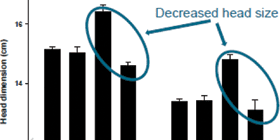
Hydrocephalus research presented at the international Europhysiology Conference
Alexandra Hochstetler was one of our ten Young Investigator Travel Award winners at the 2018 HACONNECT. This past weekend, she presented her work at the Europhysiology Conference held in London, United Kingdom!

Shunt versus ETV: Five year outcomes from the International Infant Hydrocephalus Study (IIHS)
The IIHS gathered data from more than 20 hospitals around the world, compared the effectiveness of shunts versus endoscopic third ventriculostomies (ETVs). This study started in 2005 and these are the five year outcomes.
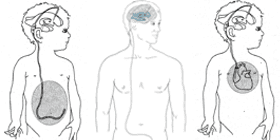
Risk Factors for Ventriculoperitoneal (VP) Shunt Failure in Children and Adults
What specific factors are associated with VP shunt failure within 30 days of its placement? Do secondary shunts fail more often than primary (or first) shunts?

Choosing The Best College For You
Some of us with Hydrocephalus have the added stress of learning differences. These factors come into play when we start thinking about college.
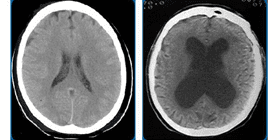
Is there a connection between apathy and gait improvement in patients with Normal Pressure Hydrocephalus (NPH)?
Idiopathic NPH (iNPH) is a disorder commonly seen in older adults. The three common symptoms seen in adults with iNPH include: gait disorder (difficulty walking), inability to control urination, and behavioral disturbances.

Half a Million Dollars Secured for Hydrocephalus Research
In 2015, HA supported Dr. Michael Piper with a $50,000 Innovator Award to study how ependymal cells develop. We are happy to report that this preliminary work recently resulted in Dr. Piper winning a $500,000 grant from the National Health and Medical Research Council of Australia.

Balance Therapy Tips for NPH Patients
A few months ago, I noticed that my balance was deteriorating so I mentioned it to my GP at my annual physical. He immediately ordered a CT scan and more Physical Therapy.
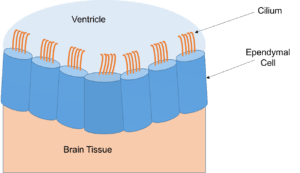
New views on Postinfectious Hydrocephalus
A recent study published in Nature, Dr. Chay Kuo, out of Duke University, discovered a mechanism that may lead to the development of Postinfectious Hydrocephalus.

Choice of Treatment could Alter Risk of Hydrocephalus After a Subarachnoid Hemorrhage
Hydrocephalus research is conducted all over the world. A recent study sheds light on the risk of developing shunted hydrocephalus after a specific type of brain bleed.
ETV-CPC for the treatment of infants with hydrocephalus
To determine if ETV-CPC provided a benefit compared to ETV alone or placement of a shunt, the HCRN decided to conduct a study which was recently published in the Journal of Neurosurgery: Pediatrics.
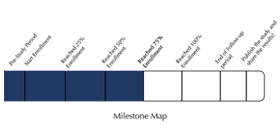
CSF Shunt Entry Site Trial
The CSF Shunt Entry Site Trial has reached the 75% mark in patient enrollment, that is 385 patients enrolled!

Tools To Help Patients With Hydrocephalus Make Informed Decisions About Their Health Care.
Most people with hydrocephalus have to live with the condition for their whole lives. Shunt surgery is just a method of treatment for hydrocephalus, but it is not a cure.

Department of Defense Funds Two Research Studies on Hydrocephalus
Department of Defense funding of two hydrocephalus researchers reflects the success of the Hydrocephalus Association’s Research and Advocacy Initiatives.
Exercise Tips for NPH patients
Trish recommends finding an activity to help you challenge both your mind and body and have fun while doing it! Read more about her exercise tips for NPH patients.
Preliminary results from the International Infant Hydrocephalus Study
There are two common treatment options available for infants that suffer from Aqueductal stenosis: implantation of a shunt or an endoscopic third ventriculostomy
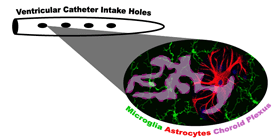
From Patient to Progress: New insights into preventing shunt blockages
While shunt implantation is a typical treatment option for people with hydrocephalus, there have been surprisingly few advances to decrease shunt failure rates since the 1950s

The Vision to End Hydrocephalus after a Brain Bleed
The Hydrocephalus Association’s annual Vision Dinner highlights the advances in research that aims to prevent or minimize the development of hydrocephalus after a brain bleed.
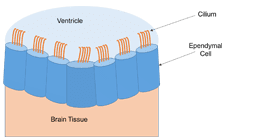
New Theories in Posthemorrhagic Hydrocephalus
A recent study expands these results to posthemorrhagic hydrocephalus in premature infants. Please take a moment to read more about this important research.

Interview with Olivia Bell, Cognitive Therapist – Part 1
This is the first part of Trish’s interview with cognitive therapist Olivia Bell. It covers who benefits from CT, how to find a therapist, and how to get the most out of the therapy appointments.
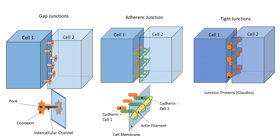
New Theories in Fetal-Onset Hydrocephalus
Current research suggests that a cascade of events involving cell junctions, the VZ, and the SVZ may be the cause of fetal-onset hydrocephalus and its accompanying neurological disorders.